Differentiation in the 21st Century Classroom
A modular learning solution designed to help educators implement scalable personalized learning strategies in high-density environments.
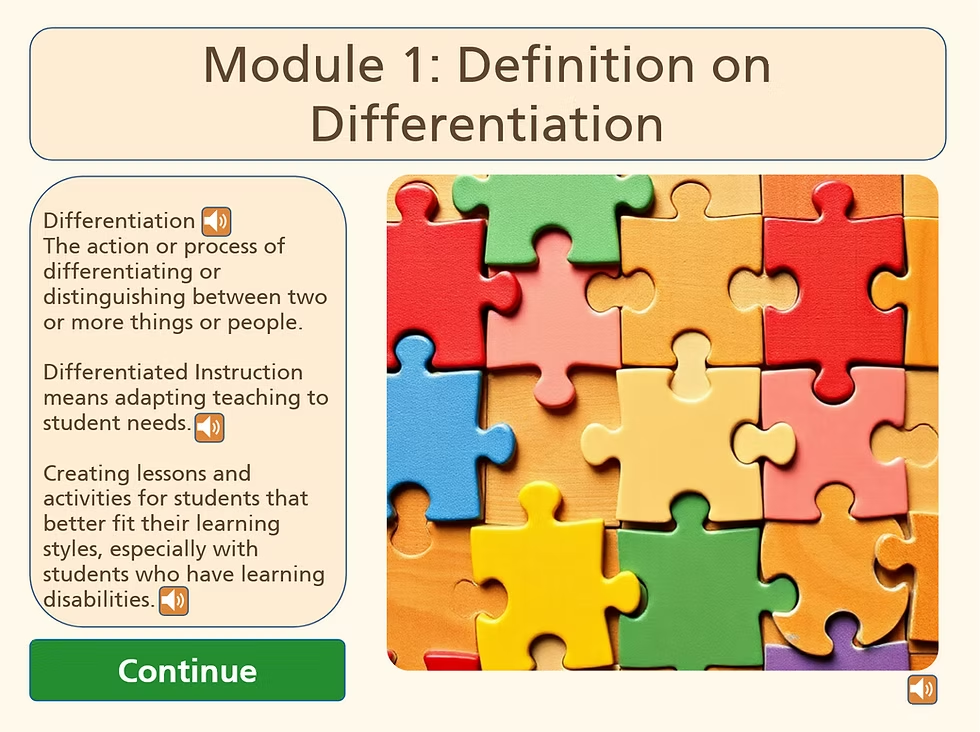
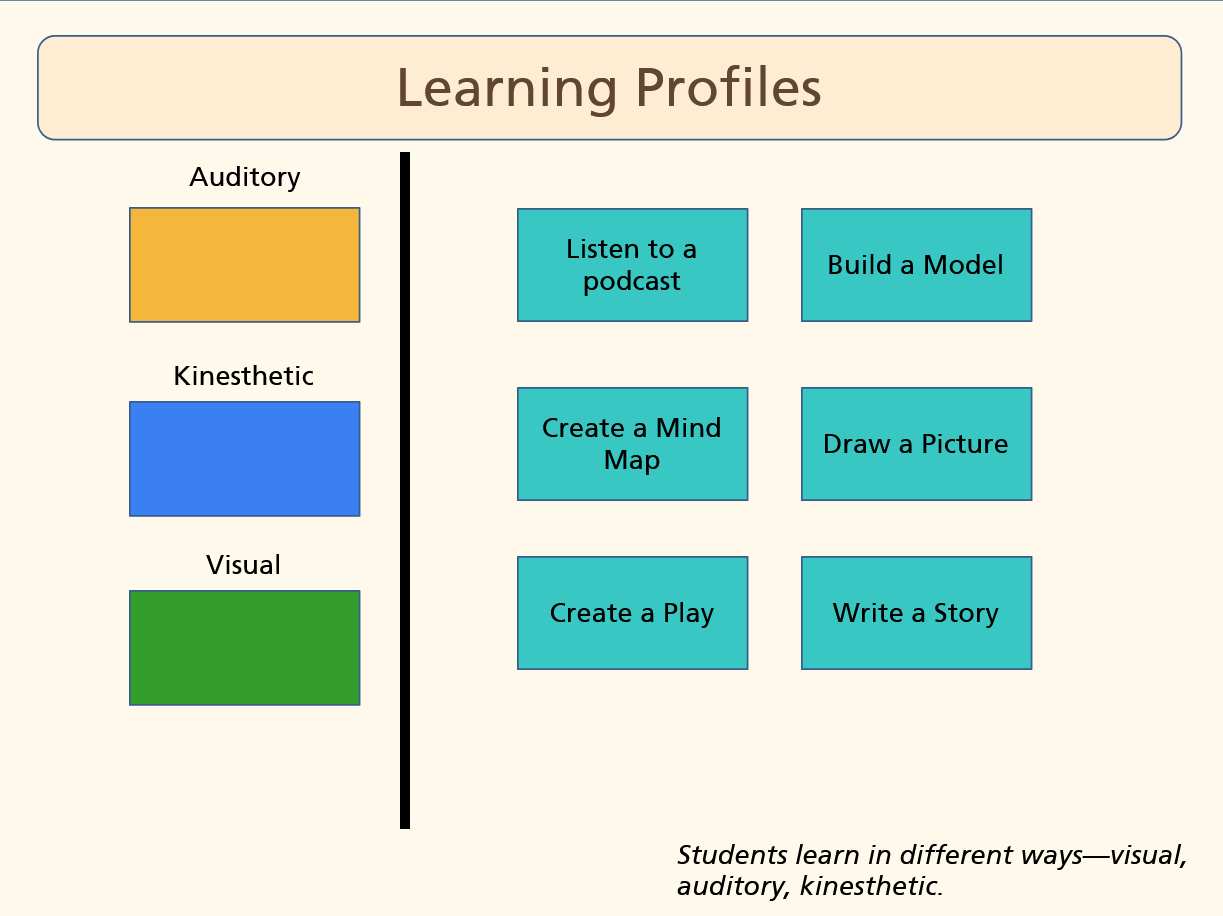
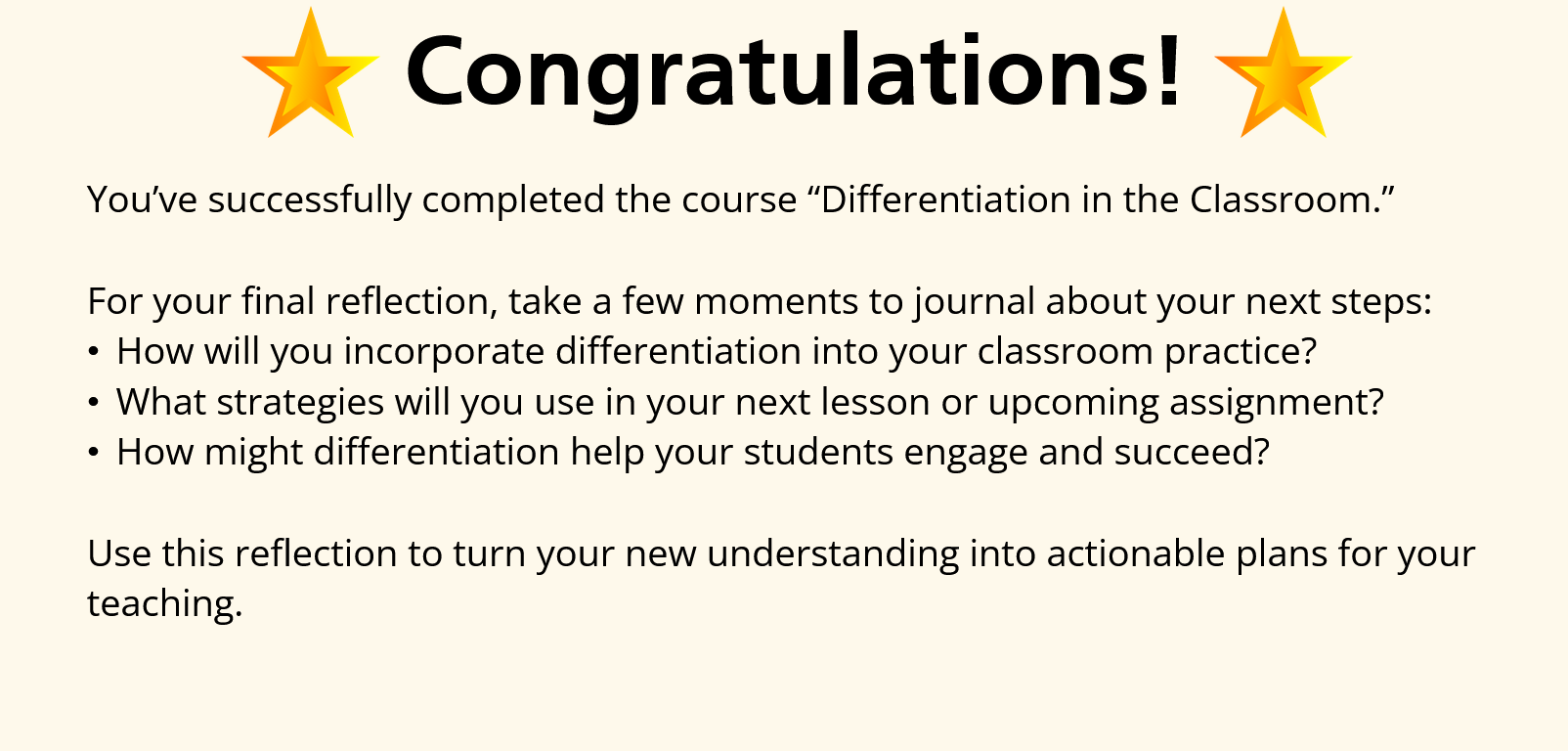
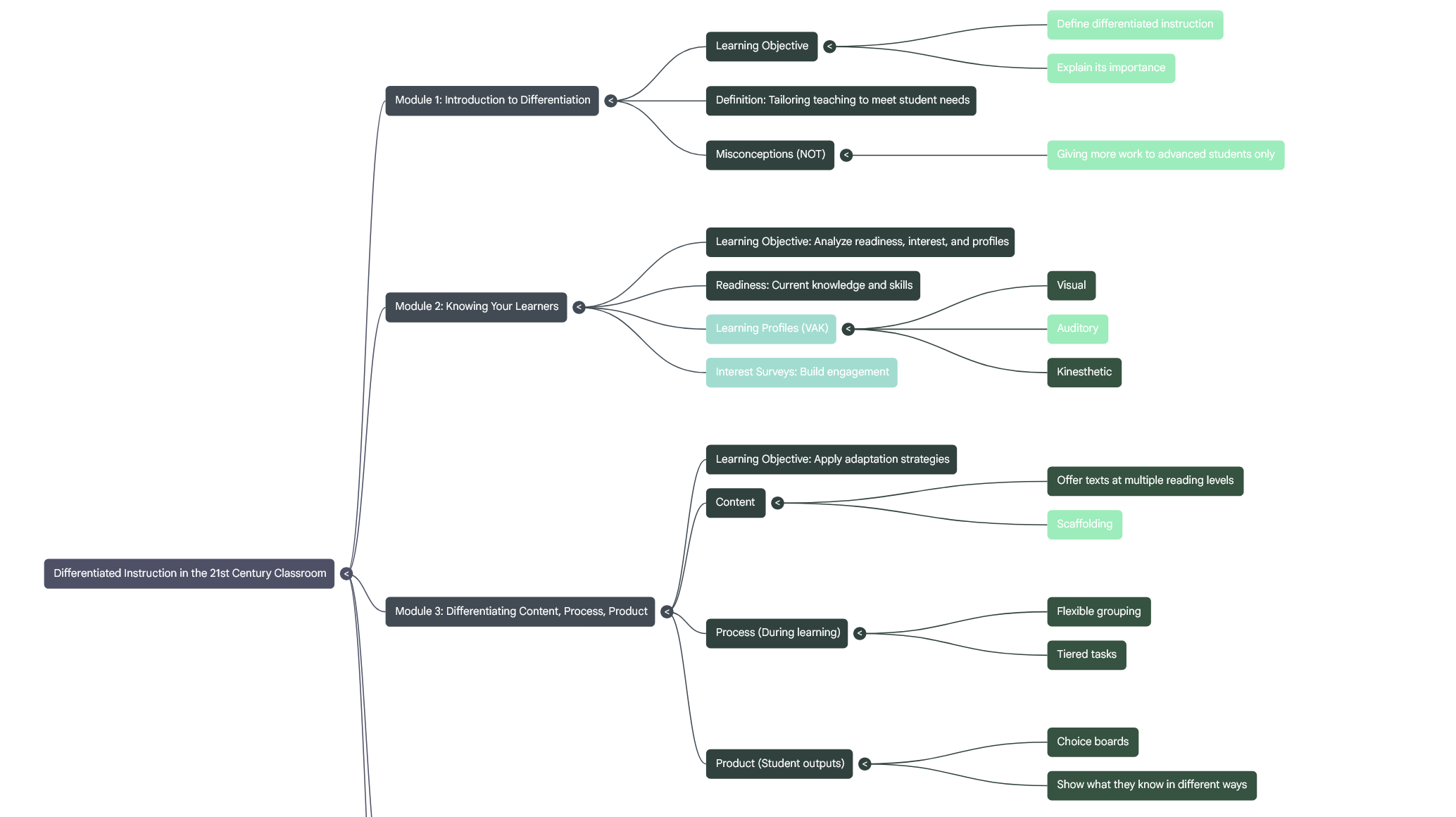
This interactive eLearning course introduces educators to the key principles of differentiated instruction in today’s diverse classrooms. It blends scenario-based learning, reflective prompts, and visual storytelling to help teachers understand how to adapt content, process, and assessment to meet every learner’s needs.
- Audience: K–12 teachers...
- Responsibilities: Instructional design...
- Tools Used: Articulate Storyline 360
The Problem
Teachers often recognize the importance of differentiation but struggle to apply it consistently due to limited time, lack of models, and misconceptions about what differentiation truly involves.
The goal was to create an engaging and accessible microlearning experience that would help educators internalize key principles and immediately apply them in their classrooms.
The Learning Solution
I designed a short, scenario-driven module that illustrates how differentiated instruction supports student engagement and equity.
Learners encounter classroom examples and make instructional decisions, receiving targeted feedback to reinforce understanding. Many differentiation strategies are also implemented into the course, such as narration. The course concludes with a quiz and reflective journaling activity to help educators connect the learning to their own practice.
Instructional Elements
My Process
Using the ADDIE framework, I conducted a needs analysis to pinpoint where teachers often get stuck—especially in moving from theory to practice.
The design phase focused on simplifying complex pedagogical ideas through story-centered design and conversational narration. I developed a detailed storyboard in Google Docs before building the experience in Articulate Storyline 360, ensuring alignment with both learning objectives and accessibility standards.
Action Map
The learning goal centered on helping teachers plan lessons that reflect differentiated instruction principles. Each scenario guided teachers to recognize when and how to adjust instruction based on readiness, interest, or learning profile.
Visual Design
To make the course visually inviting, I created clean layouts and consistent color palettes inspired by modern classroom environments. Graphics and icons were designed in Storyline 360 to maintain an approachable and cohesive look. The design emphasizes readability, simplicity, and engagement for educators accessing the module across devices.
Development
In Storyline 360, I incorporated layered interactions, branching feedback, and smooth transitions to keep the learning flow intuitive. Variables and triggers were used to track choices, offering personalized responses that highlight why one differentiation approach might work better than another. The final lesson was published as a responsive HTML5 course for easy distribution.
Results and Takeaways
Through this project, I strengthened my ability to distill educational theory into actionable, learner-centered design. This project reinforced my passion for creating eLearning that bridges the gap between pedagogical insight and classroom application.